
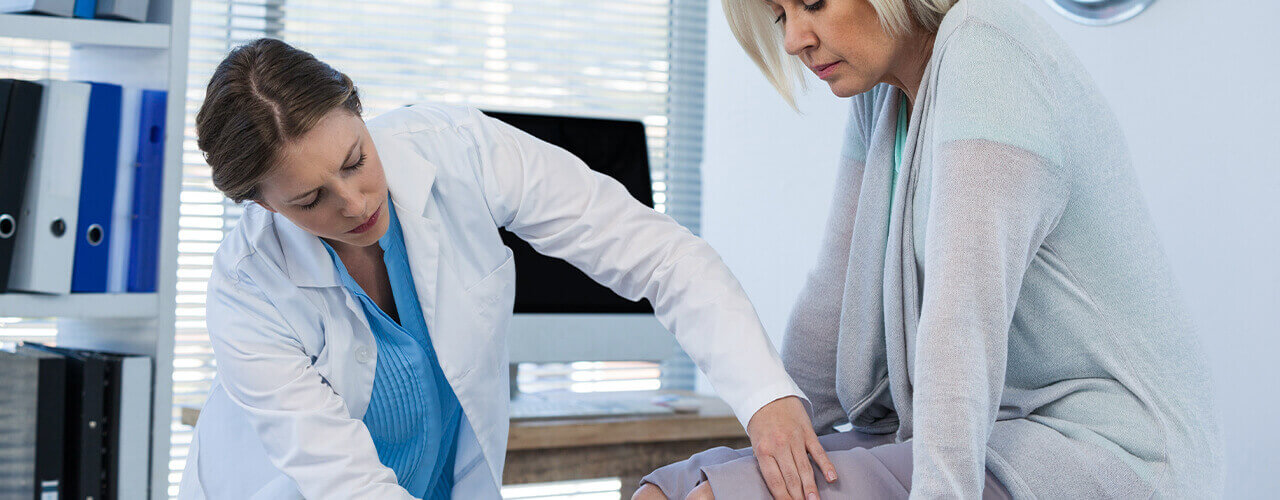
A sharp pain in your hip that makes walking feel like a chore. A knee so unstable you brace yourself with every step. When your hips and knees aren’t working the way they should, even the most basic daily activities become a challenge — and the problem rarely gets better on its own. At Fultz Physical Therapy & Joint Rehab, our physical therapists at our South Shreveport, North Shreveport, and South Bossier clinics deliver targeted, hands-on. care to get you moving freely and confidently again — without drugs or surgery.
Understanding Hip & Knee Pain
The hip and knee are the two largest weight-bearing joints in the body, and they work together as part of your kinetic chain — the interconnected system of joints responsible for posture, balance, and movement. When one joint is compromised, the other often pays the price.
The hip is a ball-and-socket joint designed for both mobility and stability, supporting the full weight of your upper body with every step. The knee is a hinge joint that must withstand even greater forces while enabling the full range of motion required for walking, running, climbing stairs, and standing for extended periods.
Pain in either joint can originate locally or be referred from elsewhere in the body. A hip problem can transmit pain signals to the knee, and vice versa. An imbalance anywhere along the kinetic chain creates undue stress and accelerated wear — which is why a thorough evaluation of both joints is always part of our assessment process.
Common Causes of Hip & Knee Pain
Because they share similar structures and are subject to similar demands, the hips and knees are prone to many of the same conditions:
- Arthritis – Cartilage breakdown in the hip or knee causes bone-on-bone friction, stiffness, and chronic pain that worsens with activity
- Tendinitis – Repetitive motion and overuse lead to tendon inflammation in and around both joints
- Strains and Sprains – Acute injuries to the muscles, ligaments, or tendons surrounding the hip or knee
- Bursitis – Inflammation of the bursa sacs in the knee causes localized pain and swelling, particularly with kneeling or prolonged activity
- Labral Tears – Cartilage injuries specific to the hip joint that cause deep, aching pain and reduced range of motion
- Sciatica – A pinched sciatic nerve can refer pain from the lower back through the hip and down into the knee
- Patellofemoral Stress Syndrome – Abnormal kneecap tracking, often caused by weak gluteal muscles or tight hip flexors, creates pain at the front of the knee
- Iliotibial Band Friction Syndrome – A common overuse injury in runners and cyclists that causes pain along the outer knee and hip
- Gait and Postural Imbalances – An uneven stance or altered walking pattern places asymmetrical stress on the hips and knees, accelerating joint deterioration over time
How Physical Therapy Treats Hip & Knee Pain
At Fultz Physical Therapy & Joint Rehab, we don’t just treat the joint that hurts — we evaluate the entire kinetic chain to identify the root cause of your pain. Your physical therapist will assess your posture, gait, range of motion, and joint stability before designing a comprehensive treatment plan tailored to your specific condition and goals.
Your treatment plan may include:
- Manual Therapy – Hands-on joint mobilization and soft tissue techniques to reduce pain, restore alignment, and improve joint mechanics
- Therapeutic Exercise – Targeted strengthening of the hip, knee, glute, and core musculature to stabilize joints and correct the imbalances driving your pain. Research has shown that kneecap pain responds better to combined hip and knee strengthening than knee-focused exercise alone
- Functional Dry Needling – Releases trigger points in the muscles contributing to hip and knee dysfunction, reducing pain and improving mobility
- Corrective Exercise – Movement retraining to address faulty mechanics, postural imbalances, and compensatory patterns that place excessive stress on the joints
- Gait and Postural Analysis – Identifying and correcting the way you stand, walk, and move to normalize load distribution across the kinetic chain
- Thermal and Modality Treatments – Heat, ice, and ultrasound therapy to reduce inflammation, promote tissue healing, and manage pain
Get Back to Moving Without Pain
Hip and knee pain is common — but it isn’t something you have to accept as permanent. The physical therapists at Fultz Physical Therapy & Joint Rehab are ready to help you move better and live fully, with convenient locations in South Shreveport, North Shreveport, and South Bossier, LA serving patients throughout the Shreveport-Bossier area.
Contact us today to request your appointment and start your path to pain-free movement.
FAQs
What causes knee pain?
Your knees are hinge joints that allow for the forward-and-backward motions within the joint.
The knee is one of the largest joints in your body, made up of a complex system of bones, tendons, and ligaments. Because of this, the knee can be easily injured due to overexertion or repetitive motions. Additionally, knee pain can be caused due to an underlying ailment. Some of the most common causes of knee pain are sprains, strains, fractures, tears, dislocation, tendinitis, bursitis, and arthritis.
What can I do to relieve knee pain?
There are some actions you can take on your own to relieve your knee pain, including wearing properly fitted shoes, using hot and cold remedies, stretching, and taking breaks from physical activity when noticing painful flare-ups. However, physical therapy is the best way to find consistent, long-lasting relief for your knee pain. Through manual therapy, strength training, flexibility training, balance training, and pain-specific exercises, physical therapy can get your knees moving comfortably once again.
How do I get rid of knee pain?
Frequently consulting with a physical therapist is the best way to continually manage your knee pain. Having a regular physical therapy checkup ensures that your joints are working at their peak performance. In addition, any problems will be discovered early, preventing the onset of arthritis and joint injury. If you do have arthritis or have had surgery, then a regular physical therapy check-up is especially important, in order to make sure that your knee pain remains at bay.
How do you diagnose knee pain?
Our physical therapists will examine your knee for signs of misalignment or structural damage, in addition to examining your stance, posture, gait, and range of motion. If needed, additional tests (such as x-rays) may be conducted. This will help determine the cause of your knee pain so we can treat it accordingly. After your initial evaluation is complete, your physical therapist will prescribe a physical therapy plan specifically for you, aimed at relieving unnatural stresses and strains, and normalizing your joint function.
 Print Patient Forms
 Our Locations
 FAQ
 Conditions We Treat